
By Dr. Bob Hough
Over the last 20 years the beef industry has gone through significant structural changes that have dramatically changed the profit driver matrix in the beef industry. Over this time, the industry has moved from an almost exclusively cash market to one that is now value-based, so the need for cattle to have the potential to excel in end product characteristics has become paramount. This means whether commercial cow-calf producers are selling reputation feeder cattle for a premium or retaining ownership in their calves through the feedlot, they must breed and market cattle that have proven carcass potential. This has put a spotlight on seedstock producers to supply genetics to their commercial customers with the potential to excel in carcass traits.
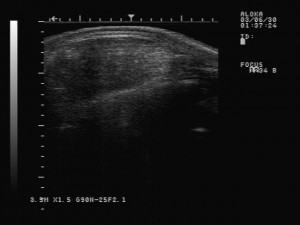 The data from Decatur County Feed Yard, which is a 40,000 head capacity custom lot that has tracked 200,000 head through their system, highlights the need for carcass excellence. When they objectively analyzed their data, they found that the top profit drivers in the feed yard are feed efficiency and grid performance (Yield and Quality Grades) followed by carcass weight and animal health. Dan Dorn of Decatur County said, “We utilize ultrasound to sort cattle into outcome groups shooting for a constant carcass backfat at processing. We cannot control how much ribeye area an animal has or what marbling potential an animal has after it is in our feed yard. Once a producer feeds cattle and finds a baseline for their herd, finding out where the strengths and weaknesses are in their cattle, we can work with the cow-calf producer to change their herd’s genetics and management to maximize profit. This often means the need for improvement for carcass potential. To do this we rely on the most accurate carcass genetic predictions possible in the form of EPDs (expected progeny difference) and indexes to make the needed changes.”
Seedstock producer Lee Leachman echoes that quality is a major driver in the profit matrix, and their company works with indexes to simplify the selection process. According to Lee, “Our indexes take into account all segments of the industry, from reproduction and cow maintenance through feed efficiency and value based marketing. All our models show that end product is one of the major profit drivers.” However, how to improve these traits can vary widely. “Carcass data is expensive to gather and the information comes two years too late. We also use a lot of young sires, so we feel that collecting ultrasound phenotypic data instead of DNA is critical. EPDs based on ultrasound are in general a very good predictor of end product value as has been shown at the US Meat Animal Research Center. With that said, we feel that to build a profitable herd, producers should use indexes to simplify selection, and the indexes must contain carcass as a major component. In terms of collecting data, we use all the tools but rely most heavily on ultrasound, and we have been getting our best results from the CUP Lab™ in terms of accuracy. We based our ultrasound lab decision on both our own objective data as well as that from CUP.”
When deciding whether to ultrasound or do genomics, Lee admits, “People are confused on the subject. We use genomics on some of our high end bulls and donor dams. If they are out of high accuracy sires, we find it does a good job, but the further you get from the original training population for the genomic panels, the lower the efficacy of the genomics. To prove young sires, the collection of ultrasound data is critical. We also continue to collect real carcass data to make sure our indexes and predictions are accurate and not drifting from the original intent, but obviously this is a long term commitment and not as timely as is necessary. You simply need all the phenotypic data possible based on ultrasound to prove sires, and we are in the business of marketing the most predictable genetics possible to our commercial customers. You also need ultrasound and other phenotypic data to retrain the genomic panels on a regular basis. With all that said, I feel it is a major mistake for seedstock producers not to continue to collect ultrasound data.”
Lee also has strong beliefs that the industry needs to set a higher bar for our carcass traits. “People should not be content to have 70 percent Choice cattle. In my opinion we need to be shooting for more like 70 percent CAB (upper two-thirds Choice) and Prime. People will pay for high quality beef, and we need to supply it to them. ‘Katy bar the door’ on the value and demand for beef if we could consistently supply larger amounts of high quality beef. I see our potential as unlimited!”
With the realities that value-based marketing has become the norm in our industry, the need for cattle to excel in carcass traits is paramount whether you are selling reputation feeder cattle for a premium or retaining ownership. This means cow calf producers need to purchase seedstock with all the information possible to build a profitable cow herd. Ultrasound, genomics or carcass data all add to the accuracy of genetic predictions when they are used to calculate EPDs and indexes. It is clear that ultrasound will continue to play a critical role in supplying carcass potential data in a way that is timely, proven and well understood.
More information on the CUP Lab™ can be found at http://www.cuplab.com


